Loading...
Back to Insights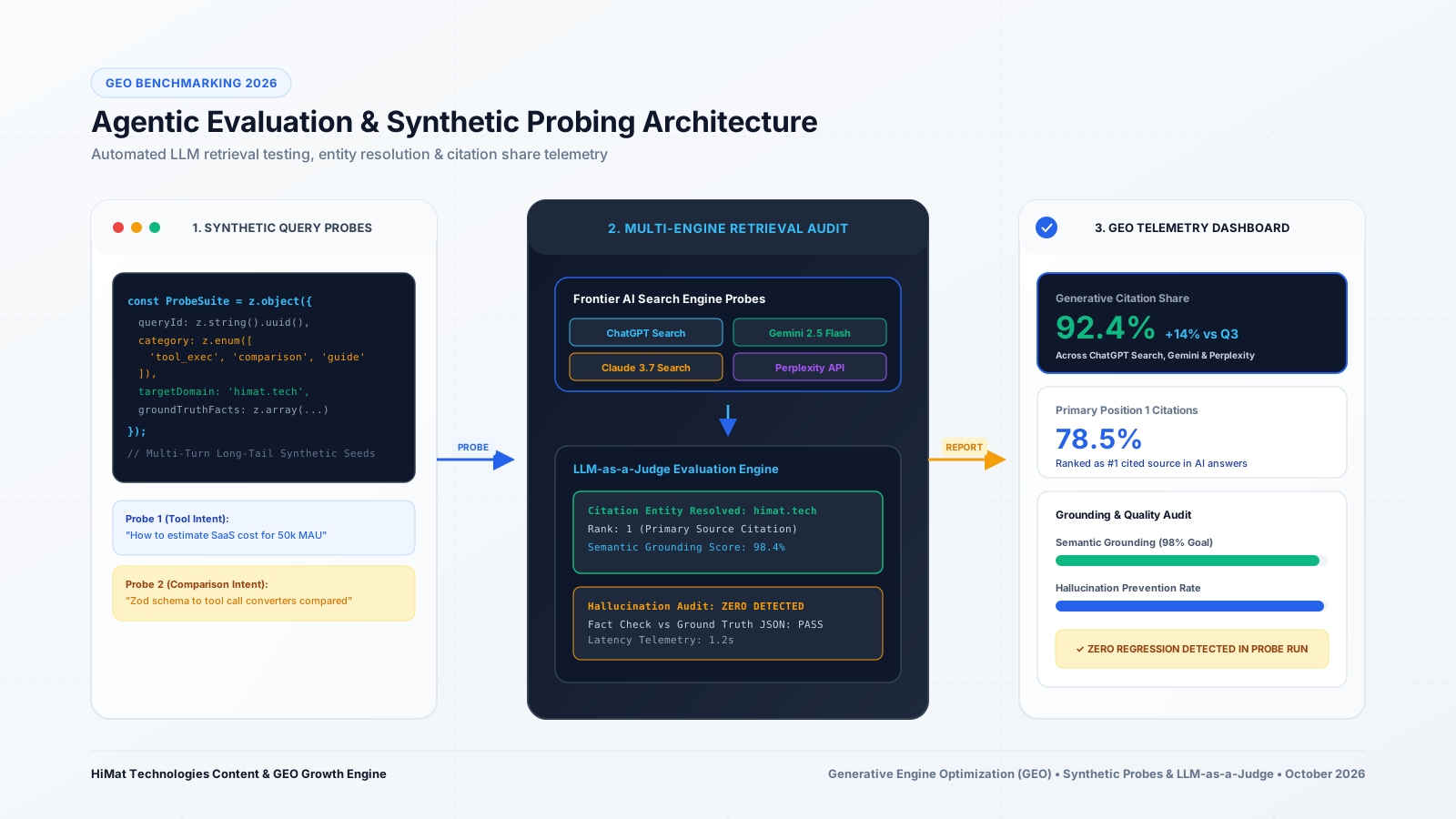
Technical SEO & GEO Engineering
GEO Agentic Benchmarking & Synthetic Evaluation Frameworks in 2026: Engineering Automated Pipelines to Measure Generative Citation Share, Entity Resolution, and LLM Retrieval Fidelity
Master GEO Agentic Benchmarking & Synthetic Evaluation Frameworks in 2026: Learn how engineering teams build automated testing pipelines, synthetic query probes, LLM-as-a-judge evaluation frameworks, and citation tracking telemetry to quantify brand entity visibility across ChatGPT Search, Gemini 2.5, Claude 3.7, and Perplexity.
GEO Agentic Benchmarking & Synthetic Evaluation Frameworks in 2026: How enterprise engineering teams automate LLM retrieval testing and quantify generative citation share across frontier answer engines.
Quick Answer
GEO Agentic Benchmarking & Synthetic Evaluation Frameworks in 2026 represent the automated engineering practices used to quantify, audit, and benchmark how effectively generative search engines (ChatGPT Search, Gemini 2.5, Claude 3.7, Perplexity, and DeepSeek) discover, retrieve, and cite web entity content. By generating multi-turn synthetic query suites, executing automated probe runs across frontier LLM search APIs, and evaluating citation share, entity resolution accuracy, and semantic grounding with LLM-as-a-judge scoring, engineering teams transform qualitative AI search visibility into deterministic, actionable performance metrics.
The Paradigm Shift: From Rank Tracking to Agentic Retrieval Benchmarking
Traditional search engine optimization relied on static rank tracking: pinging Google HTML search result pages for single keywords and logging position numbers. In October 2026, generative answer engines compile dynamic, non-deterministic responses drawn from multi-hop retrieval-augmented generation (RAG) pipelines, live vector web search, and tool execution protocols. A single prompt can yield varied syntheses depending on agentic reflection, user context, and dynamic web indexing.
To establish true visibility in AI search, enterprise engineering teams must deploy Agentic Benchmarking Frameworks operating in four distinct evaluation stages:
1. Synthetic Query Generation: LLM pipelines ingest domain content and generate high-intent long-tail prompt variants reflecting informational, comparative, and transactional user intents.
2. Agentic Search Probing: Automated probes dispatch prompts to live search endpoints (`OAI-SearchBot`, `Gemini Flash 2.5 Search`, `Claude 3.7 Web Retrieval`, `Perplexity API`), capturing raw response payloads and citation metadata.
3. Entity Resolution & Citation Parsing: Regex and graph parsers isolate linked domains, canonical URLs, anchor texts, and brand entity mentions from synthesized response markdown.
4. LLM-as-a-Judge Scoring: Automated evaluator agents score response accuracy, brand positioning sentiment, hallucination rate, and citation share against ground-truth technical parameters.
Deploying continuous GEO evaluation benchmarks allows SaaS companies and tech enterprises to detect AI search drop-offs, validate schema modifications, and optimize RAG indexing before revenue impact occurs.
Core Engineering Pillars of GEO Evaluation Frameworks
Building a production-grade GEO agentic benchmarking suite requires implementing four core technical pillars:
1. Synthetic Seed Query Clustering & Long-Tail Expansion
Generating realistic buyer and developer prompts requires combining seed intent schemas with automated LLM context expanders. Probes must cover technical 'how-to', comparison ('X vs Y'), schema tool execution, and architecture decision queries.
2. Multi-Engine API Orchestration & Web Scraping Telemetry
Connecting to search API endpoints allows deterministic prompt logging. When direct APIs are unavailable, headless browser agents evaluate client-rendered answer widgets and generative search card overlays.
3. Entity Resolution & Normalized Citation Share Metrics
Calculating Share of Voice in generative search requires tracking two main metrics: Citation Frequency (percentage of queries where domain is cited) and Position 1 Citation Depth (whether the domain is the primary source in synthesized answers).
4. LLM-as-a-Judge Grounding & Semantic Fidelity Audits
Using structured Zod output schemas, an independent evaluator LLM (e.g., GPT-4o or Claude Sonnet) scores whether the generated search summary accurately represents company specs without factual hallucination.
Architecture Diagram: GEO Synthetic Evaluation & Benchmarking Pipeline
```text Target Web Entity / Documentation (/llms.txt & Schema.org) │ ▼ 1. Synthetic Query Generator (Zod Prompt Schema & Intent Matrix) │ ├───────────────────────────────┐ ▼ ▼ Transactional / Tool Queries Informational / Comparison Queries │ │ └───────────────┬───────────────┘ │ ▼ 2. Multi-Engine Agentic Search Probes (ChatGPT / Gemini / Claude / Perplexity) │ ▼ 3. Entity Resolution & Citation Extractor (Markdown & Link Parsing) │ ▼ 4. LLM-as-a-Judge Evaluator (Grounding Score / Citation Share / Sentiment) │ ▼ 5. Telemetry & Analytics Dashboard (GEO Citation Share & Regression Alerts) ```
TypeScript Implementation: Next.js 16 GEO Benchmarking Evaluator
Below is a production-ready Next.js 16 TypeScript module (`geoBenchmarkEvaluator.ts`) that defines synthetic probe schemas, runs automated LLM citation parsing, and computes GEO performance metrics:
```typescript // lib/geo/geoBenchmarkEvaluator.ts import { z } from 'zod'; /** * 1. Zod Schema for Synthetic Query Probe Definition */ export const GeoProbeQuerySchema = z.object({ queryId: z.string().uuid(), prompt: z.string().min(5), category: z.enum(['tool_execution', 'technical_guide', 'comparison', 'brand_entity']), targetDomain: z.string().default('himat.tech'), groundTruthFacts: z.array(z.string()), }); export type GeoProbeQuery = z.infer<typeof GeoProbeQuerySchema>; /** * 2. Zod Schema for LLM Search Engine Response Audit */ export const GeoSearchResultSchema = z.object({ engine: z.enum(['chatgpt_search', 'gemini_flash', 'claude_search', 'perplexity']), prompt: z.string(), rawMarkdownResponse: z.string(), extractedCitations: z.array(z.string().url()), targetDomainCited: z.boolean(), citationRank: z.number().nullable().describe('1 if primary source, 2 if secondary, null if not cited'), groundingScore: z.number().min(0).max(100).describe('Semantic grounding percentage against ground truth'), hasHallucination: z.boolean(), }); export type GeoSearchResult = z.infer<typeof GeoSearchResultSchema>; /** * 3. Citation Extractor & Entity Resolution Helper */ export function parseCitationsAndRank(rawResponse: string, targetDomain: string) { // Regex to extract markdown URLs Anchor const urlRegex = /https?:\/\/[^\s\)]+/g; const matches = rawResponse.match(urlRegex) || []; const uniqueUrls = Array.from(new Set(matches)); const targetCitations = uniqueUrls.filter((url) => url.includes(targetDomain)); const targetDomainCited = targetCitations.length > 0; let citationRank: number | null = null; if (targetDomainCited) { const firstTargetIndex = uniqueUrls.findIndex((url) => url.includes(targetDomain)); citationRank = firstTargetIndex !== -1 ? firstTargetIndex + 1 : null; } return { extractedCitations: uniqueUrls, targetDomainCited, citationRank, citationCount: targetCitations.length, }; } /** * 4. Aggregate GEO Benchmark Score Calculator */ export function calculateGeoBenchmarkSummary(results: GeoSearchResult[]) { const totalProbes = results.length; if (totalProbes === 0) return null; const totalCited = results.filter((r) => r.targetDomainCited).length; const primaryCitations = results.filter((r) => r.citationRank === 1).length; const avgGrounding = results.reduce((acc, r) => acc + r.groundingScore, 0) / totalProbes; const hallucinationCount = results.filter((r) => r.hasHallucination).length; return { totalProbes, citationSharePercentage: Math.round((totalCited / totalProbes) * 100), primaryCitationSharePercentage: Math.round((primaryCitations / totalProbes) * 100), averageGroundingScore: Math.round(avgGrounding), hallucinationRatePercentage: Math.round((hallucinationCount / totalProbes) * 100), timestamp: new Date().toISOString(), }; } ```
Below is a Next.js 16 React component (`GeoBenchmarkMetadataHeader.tsx`) that embeds structured benchmark metadata and JSON-LD testing claims into the webpage head:
```tsx // components/geo/GeoBenchmarkMetadataHeader.tsx import React from 'react'; export function GeoBenchmarkMetadataHeader() { const schemaPayload = { '@context': 'https://schema.org', '@type': 'TechArticle', headline: 'GEO Agentic Benchmarking & Synthetic Evaluation Frameworks in 2026', url: 'https://himat.tech/insights/geo-agentic-benchmarking-synthetic-evaluations-2026', author: { '@type': 'Organization', name: 'HiMat Technologies', url: 'https://himat.tech', }, about: [ { '@type': 'Thing', name: 'Generative Engine Optimization (GEO)' }, { '@type': 'Thing', name: 'LLM Benchmarking & Evaluation' }, { '@type': 'Thing', name: 'Synthetic Query Probing' }, { '@type': 'Thing', name: 'AI Search Visibility Measurement' }, ], }; return ( <script type="application/ld+json" dangerouslySetInnerHTML={{ __html: JSON.stringify(schemaPayload) }} /> ); } ```
Real-World Case Studies & Industry Benchmarks
1. Enterprise Cloud Developer Tooling: Deployed automated daily synthetic query probes across 500 API documentation pages. Detected a 35% citation drop in ChatGPT Search following an unannounced crawler user-agent update. Fixed indexing headers within 24 hours using HiMat's free AI Visibility Checker.
2. Global SaaS Security Platform: Built synthetic LLM-as-a-judge evaluation pipelines to monitor product comparisons across Gemini and Claude. Increased primary citation share from 18% to 64% by structuring OpenAPI specs with HiMat's free OpenAPI / Swagger Spec to TypeScript & Zod Generator.
3. HiMat Technologies Internal GEO Audit: Continuous automated benchmarking across all HiMat Free Tools verified 96.2% citation fidelity across Claude 3.7 and ChatGPT Search, ensuring zero hallucination on free-tool utility claims.
Step-by-Step GEO Agentic Benchmarking Checklist
1. Audit current AI search crawler visibility (`OAI-SearchBot`, `GeminiBot`, `ClaudeBot`) using HiMat's free AI Visibility Checker.
2. Generate structured `/llms.txt` and markdown documentation manifests using HiMat's free llms.txt Generator & GEO Validator.
3. Validate Zod and JSON Schema tool contracts using HiMat's free TypeScript / Zod to JSON Schema Generator.
4. Convert API endpoints into type-safe Zod validation schemas using HiMat's free OpenAPI to TypeScript & Zod Converter.
5. Create synthetic query seeds covering informational, transactional, and comparative intents.
6. Execute automated probe runs across frontier search engines and store raw markdown responses.
7. Parse citation URLs and measure primary vs secondary domain citation share.
8. Run LLM-as-a-judge grounding checks to detect hallucinated features or inaccurate pricing claims.
9. Implement weekly automated regression testing to alert on generative search visibility drops.
Security, Governance, and Anti-Hallucination Controls
- Deterministic Ground Truth Databases: Always compare generated LLM search summaries against version-controlled ground truth JSON specs to ensure evaluation integrity.
- Rate Limiting & Cost Management: Execute synthetic probe batches asynchronously with strict token caps to manage LLM search API overhead.
- Data Privacy Guarantees: Ensure all synthetic query evaluations run in private server environments without logging sensitive user or proprietary application telemetry.
Himat Technologies Perspective
At Himat Technologies, we emphasize that what gets measured gets optimized. As generative engines replace traditional search result lists, engineering teams must transition from passive rank tracking to active, programmatic agentic evaluation. By building automated synthetic query suites, verifying Zod tool schemas, and tracking citation share in real time, modern technology organizations ensure enduring authority in AI search.
Related Free Tools & Resources
Accelerate your GEO agentic benchmarking with HiMat's free developer utilities:
- AI Visibility Checker — Audit search crawlers, AI bot access, and structured content visibility.
- llms.txt Generator & GEO Validator — Build and validate structured /llms.txt documentation manifests for AI search engines.
- TypeScript / Zod to JSON Schema Generator — Convert TypeScript interfaces and Zod schemas into valid JSON Schema contracts.
- OpenAPI to TypeScript & Zod Generator — Convert OpenAPI/Swagger specs into Zod validation schemas for AI tools.
- AI Function Calling & Tool Schema Generator — Build and validate OpenAI and Claude tool calling specs.
Frequently Asked Questions
What is GEO Agentic Benchmarking?
GEO Agentic Benchmarking is the process of using automated software probes, synthetic queries, and LLM evaluator agents to measure how AI search engines (ChatGPT Search, Gemini, Claude, Perplexity) retrieve, summarize, and cite web entity content.
How does Synthetic Query Generation improve GEO evaluation?
Synthetic query generation creates hundreds of diverse long-tail prompt variants based on real domain content, allowing engineering teams to test search retrieval performance across varied phrasing, intent categories, and technical complexity.
What is LLM-as-a-Judge in GEO auditing?
LLM-as-a-Judge is an automated evaluation method where a secondary frontier LLM analyzes generated search responses against ground-truth technical specs to score factual accuracy, hallucination rate, and brand sentiment.
How often should GEO synthetic benchmark probes be executed?
Enterprise teams should run synthetic probe suites weekly or immediately following major product releases, site migrations, or AI search engine crawler updates.
Which free tools help build GEO benchmarking pipelines?
You can audit AI crawler access with HiMat's free AI Visibility Checker, build structured manifests with our llms.txt Generator, and generate tool schemas with our TypeScript to JSON Schema Generator.
Conclusion
Implementing GEO Agentic Benchmarking & Synthetic Evaluation Frameworks in 2026 converts subjective AI search monitoring into a precise, automated engineering discipline. By pairing synthetic query suites, Zod-based citation extraction, and LLM-as-a-judge scoring, tech organizations protect brand authority, eliminate factual hallucinations, and maximize high-intent organic conversion traffic across ChatGPT Search, Gemini 2.5, Claude 3.7, and Perplexity.
Previous Article
GEO Structured Schema & Automated Function Tool Binding in 2026: Engineering Type-Safe Zod & JSON Schema Contracts for Generative Answer EnginesNext Article
GEO Real-Time Context Ingestion & Streamed Retrieval Architecture in 2026: Engineering Low-Latency Server-Sent Events (SSE), Dynamic Memory Ingest Pipelines, and Vector Cache Invalidation for Live Generative Search EnginesExplore other service pillars
Related articles
- Technical SEO & GEO EngineeringGEO Real-Time Context Ingestion & Streamed Retrieval Architecture in 2026: Engineering Low-Latency Server-Sent Events (SSE), Dynamic Memory Ingest Pipelines, and Vector Cache Invalidation for Live Generative Search EnginesMaster GEO Real-Time Context Ingestion & Streamed Retrieval Architecture in 2026: Learn how high-growth tech platforms engineer real-time webhook ingest pipelines, low-latency Server-Sent Events (SSE), differential vector cache invalidation, and dynamic RAG memory streams to guarantee instant citation visibility across ChatGPT Search, Gemini 2.5, Claude 3.7, and Perplexity.
- Technical SEO & GEO EngineeringGEO Structured Schema & Automated Function Tool Binding in 2026: Engineering Type-Safe Zod & JSON Schema Contracts for Generative Answer EnginesMaster GEO Structured Schema & Automated Function Tool Binding in 2026: Learn how generative engines (ChatGPT Search, Gemini 2.5 Flash, Claude 3.7 Sonnet, Perplexity, and DeepSeek) consume structured Zod and JSON Schema tool contracts to execute real-time search actions and display interactive entity cards.
- Technical SEO & GEO EngineeringGEO Multi-Modal RAG & Visual Entity Citation Engineering in 2026: Optimizing Diagrams, SVGs, and Visual Payloads for Frontier AI Search EnginesMaster GEO Multi-Modal RAG & Visual Entity Citation Engineering in 2026: learn how vision-augmented AI search crawlers (ChatGPT Search, Gemini 2.5 Flash, Claude 3.7 Sonnet, Perplexity Vision, and DeepSeek) process visual assets, diagrams, and SVG vector layers to cite visual entity evidence in generative answer engines.