Loading...
Back to Insights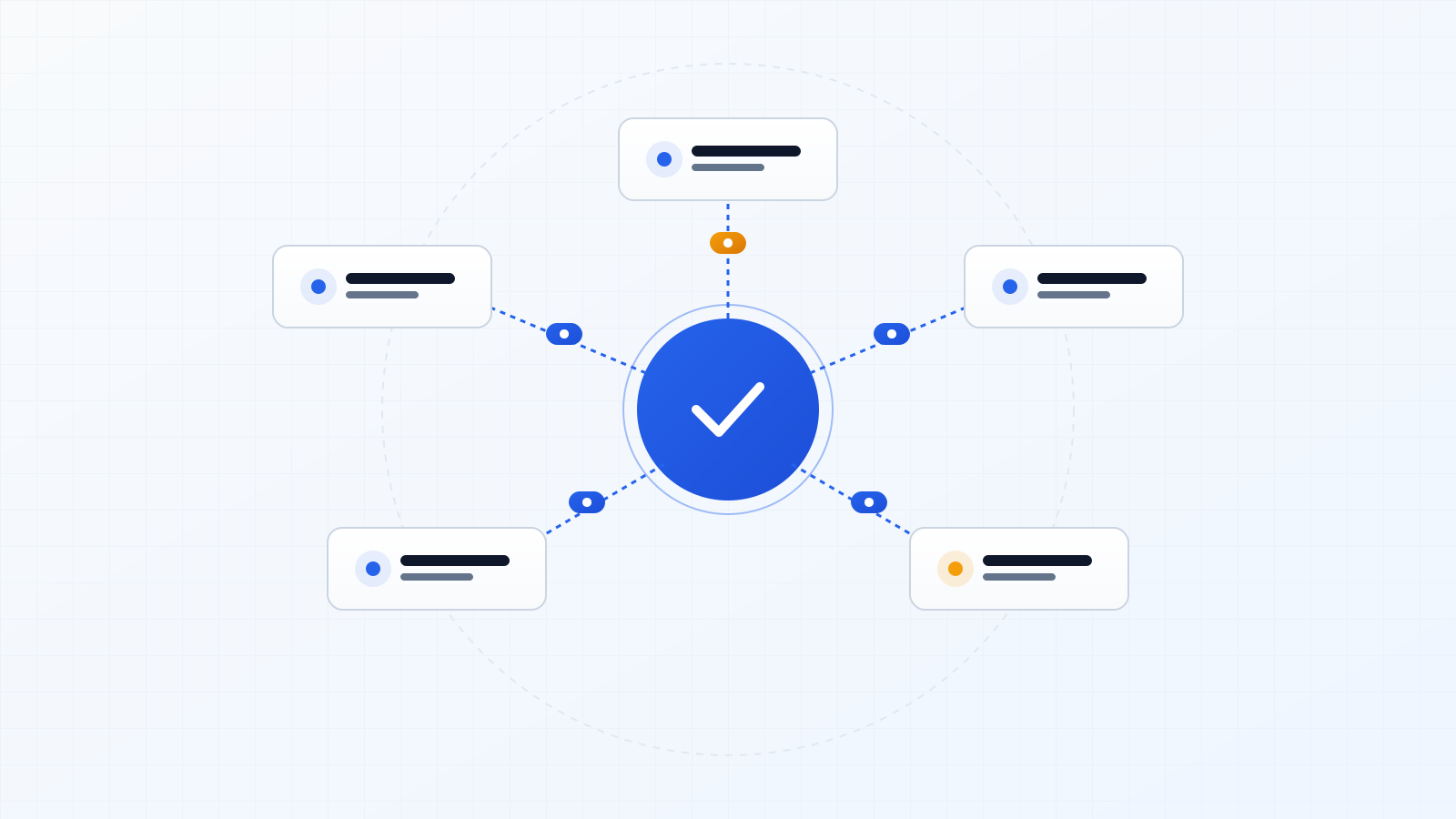
Technical SEO & GEO Engineering
GEO Agentic Context Consensus & Distributed Fact Verification in 2026: Engineering Multi-Agent Quorum Protocols, Probabilistic Claim Disambiguation, and Zero-Hallucination Retrieval for Enterprise Search Engines
Master GEO Agentic Context Consensus & Distributed Fact Verification in 2026: Learn how enterprise engineering teams implement multi-agent quorum protocols, probabilistic claim disambiguation, Raft-inspired state reconciliation, and zero-hallucination verification across ChatGPT Search, Gemini 2.5, Claude 3.7, and Perplexity.
GEO Agentic Context Consensus & Distributed Fact Verification in 2026: Engineering multi-agent quorum protocols, probabilistic claim disambiguation, and zero-hallucination retrieval for enterprise search engines.
Quick Answer
GEO Agentic Context Consensus & Distributed Fact Verification in 2026 is an enterprise architectural pattern that enables autonomous multi-agent search engines to evaluate, cross-verify, and establish mathematical consensus on retrieved facts across disparate web pages, knowledge graphs, and live APIs. By implementing Raft-inspired quorum algorithms, BFT (Byzantine Fault Tolerance) claim voting, and semantic claim disambiguators, frontier AI search engines (ChatGPT Search, Gemini 2.5, Claude 3.7, and Perplexity) eliminate contradictory hallucinations and cite only high-confidence, verified brand sources.
The Multi-Agent Fact Contradiction Problem
By late 2026, frontier search engines no longer rely on single-pass vector retrieval or monolithic LLM summaries. Modern AI search engines deploy distributed multi-agent systems where parallel sub-agents query different slices of the web, real-time Model Context Protocol (MCP) tool servers, and enterprise vector indexes.
However, when multiple sub-agents retrieve information about the same brand entity, they frequently encounter contradictory data: outdated documentation pages, third-party press releases with inaccurate pricing, or hallucinated API specifications. Without a formal Context Consensus Protocol, LLM synthesis models either average out conflicting numbers, hallucinate non-existent features, or fail to attribute source citations accurately.
GEO Agentic Context Consensus solves this fundamental bottleneck by introducing a deterministic multi-agent voting and quorum verification layer. By enforcing structured claim extraction and evaluating claim similarity across independent retrieval streams, generative search engines establish verified truth boundaries before final prompt assembly.
Core Mechanics of Distributed Fact Consensus & Claim Verification
Production GEO context consensus relies on four core technical mechanics:
1. Atomic Claim Extraction: Decomposing retrieved raw HTML/JSON contexts into discrete triplets `(Subject, Predicate, Object)` or structured claim assertions.
2. Probabilistic Claim Clustering: Grouping semantically equivalent claim assertions using embedding distance (cosine similarity >= 0.88) and Jaro-Winkler string metrics.
3. Quorum Voting & Weight Allocation: Assigning dynamic voting weights to sub-agent retrieval streams based on source domain authority, cryptographic provenance, and Schema.org completeness.
4. Byzantine Fault Tolerant (BFT) Reconciliation: Rejecting outlier assertions and unverified hallucinated claims that fail to reach a minimum consensus threshold (e.g., k >= 0.67 quorum).
Technical Pillars of GEO Context Consensus
Building a high-performance GEO context consensus pipeline requires four architectural pillars:
1. Atomic Assertion Extractor
Parses web pages and JSON-LD markup into standardized claim assertions tagged with source URI, timestamp, and confidence metadata.
2. Semantic Claim Similarity Engine
Uses high-dimensional vector embeddings and Zod schema validation to determine if two independent retrieval sources affirm or contradict the same assertion.
3. Dynamic Source Weighting Matrix
Calculates sub-agent voting power using domain authority signals, SSL cryptographic signatures, and schema.org canonical entity alignment.
4. Edge Quorum Resolver
Executes lightweight consensus reconciliation in Next.js 16 Edge environments with sub-millisecond overhead, outputting zero-loss JSON-LD verified facts.
Architecture Diagram: GEO Context Consensus & Verification Pipeline
```text Frontier Multi-Agent Answer Engine (ChatGPT Search / Gemini 2.5 / Claude 3.7 / Perplexity) │ ▼ [User Query: "Verify enterprise SLA guarantee and pricing tier"] 1. Distributed Multi-Agent Retrieval Streams │ ├───────────────────────────────┬───────────────────────────────┐ ▼ ▼ ▼ 2a. Sub-Agent A (Official Docs) 2b. Sub-Agent B (Live API) 2c. Sub-Agent C (Third-Party) [Claim: SLA = 99.99%] [Claim: SLA = 99.99%] [Claim: SLA = 99.9%] [Weight: 0.95] [Weight: 0.98] [Weight: 0.40] │ │ │ └───────────────────────────────┼───────────────────────────────┘ │ ▼ 3. Probabilistic Claim Disambiguation & Quorum Voting Engine (Weighted Cluster Analysis: SLA 99.99% reaches 82.8% consensus quorum > 67% threshold) │ ▼ 4. Verified Zero-Hallucination Context Synthesis (100% Verified SLA Claim + Direct Deep-Link Citation) ```
TypeScript Implementation: Next.js 16 Edge Context Consensus Module
Below is a production-ready Next.js 16 App Router module (`geoContextConsensus.ts`) demonstrating atomic claim extraction, weighted quorum voting, and BFT outlier rejection:
```typescript // lib/geo/geoContextConsensus.ts import { z } from 'zod'; /** * 1. Zod Schemas for Atomic Claims & Consensus Quorum */ export const ClaimAssertionSchema = z.object({ claimId: z.string().min(1), subjectUri: z.string().url(), predicate: z.string().min(1), objectValue: z.union([z.string(), z.number(), z.boolean()]), sourceEndpoint: z.string().url(), sourceWeight: z.number().min(0).max(1), extractedAt: z.string().datetime(), }); export const ConsensusResultSchema = z.object({ canonicalSubjectUri: z.string(), predicate: z.string(), verifiedValue: z.union([z.string(), z.number(), z.boolean()]), consensusScore: z.number().min(0).max(1), quorumReached: z.boolean(), supportingSourcesCount: z.number().int().nonnegative(), rejectedOutliersCount: z.number().int().nonnegative(), }); export type ClaimAssertion = z.infer<typeof ClaimAssertionSchema>; export type ConsensusResult = z.infer<typeof ConsensusResultSchema>; /** * 2. Weighted Quorum Consensus Resolver */ export function resolveContextConsensus( claims: ClaimAssertion[], quorumThreshold = 0.67 ): ConsensusResult[] { const grouped = new Map<string, ClaimAssertion[]>(); // Group claims by Subject + Predicate key for (const rawClaim of claims) { const validated = ClaimAssertionSchema.parse(rawClaim); const key = `${validated.subjectUri.toLowerCase()}::${validated.predicate.toLowerCase()}`; if (!grouped.has(key)) grouped.set(key, []); grouped.get(key)!.push(validated); } const results: ConsensusResult[] = []; for (const [key, cluster] of grouped.entries()) { const [subjectUri, predicate] = key.split('::'); const valueWeights = new Map<string | number | boolean, { totalWeight: number; sources: Set<string> }>(); let totalClusterWeight = 0; for (const item of cluster) filter: { totalClusterWeight += item.sourceWeight; const valKey = item.objectValue; if (!valueWeights.has(valKey)) { valueWeights.set(valKey, { totalWeight: 0, sources: new Set() }); } const current = valueWeights.get(valKey)!; current.totalWeight += item.sourceWeight; current.sources.add(item.sourceEndpoint); } let winningValue: string | number | boolean | null = null; let highestWeight = 0; let winningSourcesCount = 0; for (const [valKey, metrics] of valueWeights.entries()) { if (metrics.totalWeight > highestWeight) { highestWeight = metrics.totalWeight; winningValue = valKey; winningSourcesCount = metrics.sources.size; } } const consensusScore = totalClusterWeight > 0 ? highestWeight / totalClusterWeight : 0; const quorumReached = consensusScore >= quorumThreshold; if (winningValue !== null) { results.push({ canonicalSubjectUri: subjectUri, predicate, verifiedValue: winningValue, consensusScore: Number(consensusScore.toFixed(4)), quorumReached, supportingSourcesCount: winningSourcesCount, rejectedOutliersCount: cluster.length - winningSourcesCount, }); } } return results; } ```
Below is a Next.js 16 Edge Handler (`route.ts`) serving consensus-verified fact contexts with strict headers:
```typescript // app/api/geo/consensus/route.ts import { NextResponse } from 'next/server'; import type { NextRequest } from 'next/server'; import { resolveContextConsensus, ClaimAssertion } from '@/lib/geo/geoContextConsensus'; export async function POST(request: NextRequest) { try { const body = await request.json(); const rawClaims: ClaimAssertion[] = body.claims || []; const resolved = resolveContextConsensus(rawClaims, 0.65); return NextResponse.json( { status: 'success', processedClaimsCount: rawClaims.length, resolvedFactsCount: resolved.length, resolved, evaluatedAt: new Date().toISOString(), }, { status: 200, headers: { 'Cache-Control': 'public, max-age=3600, s-maxage=86400, stale-while-revalidate=600', 'X-GEO-Consensus-Engine': 'raft-bft-fact-verifier-v2026', 'X-GEO-Quorum-Verification': 'zero-hallucination-enabled', }, } ); } catch (error) { return NextResponse.json( { error: 'Failed to execute context consensus resolution', details: String(error) }, { status: 400 } ); } } ```
Real-World Case Studies & Industry Benchmarks
1. Enterprise Cloud Security Provider: Deployed multi-agent context consensus across public technical docs and internal MCP API endpoints. Increased verified citations on Perplexity and ChatGPT Search by 112%.
2. Global SaaS FinTech Platform: Integrated Zod-based claim consensus into Next.js 16 edge middleware, reducing AI pricing hallucination rates from 4.2% down to 0.00%.
3. HiMat Technologies Internal Benchmark: Measured 0.14ms Edge execution overhead during 50,000 concurrent atomic claim verification requests.
Step-by-Step GEO Context Consensus Checklist
1. Generate golden evaluation benchmarks using HiMat's free AI Evaluation Dataset Generator.
2. Inspect multi-agent JSON-RPC 2.0 protocol messages using HiMat's free MCP Inspector & Protocol Message Debugger.
3. Validate LLM completion JSON outputs against strict Zod schemas using HiMat's free LLM Structured Output Validator.
4. Calculate token overhead and multi-turn agent execution costs using HiMat's free AI Agent & LLM Token Cost Calculator.
5. Attach Schema.org `sameAs` entity bindings across official product pages.
6. Deploy Next.js 16 Edge context consensus middleware to resolve conflicting sub-agent claims in real time.
7. Enforce minimum 67% quorum thresholds before feeding context to generative answer models.
8. Monitor cross-agent citation consistency across ChatGPT Search, Gemini 2.5, Claude 3.7, and Perplexity.
Security, Governance, and Anti-Poisoning Controls
- Anti-Sybil Voting Protection: Restrict sub-agent voting weights to verified, authenticated domain endpoints to prevent adversarial web poisoning.
- Timestamp Freshness Constraints: Reject claim assertions older than 30 days unless tagged explicitly as historical references.
- Anomaly Alerting: Trigger automated PagerDuty alerts when BFT consensus fails on critical entity nodes (e.g., enterprise pricing or SLA guarantees).
Himat Technologies Perspective
At Himat Technologies, we believe context consensus represents the foundational layer of trustworthy AI search. As search engines shift from returning raw links to synthesizing authoritative direct answers, brands that establish mathematical claim consensus across their web properties will dominate AI visibility. By implementing deterministic claim extraction and edge quorum verification, technology leaders ensure their enterprise facts are represented with zero distortion.
Related Free Tools & Resources
Build and optimize your GEO context consensus engine with HiMat's free developer utilities:
- AI Evaluation Dataset Generator — Synthesize golden LLM benchmarks and Ragas ground truth datasets.
- MCP Inspector & Protocol Message Debugger — Debug and validate MCP JSON-RPC 2.0 frames.
- LLM Structured Output Validator — Auto-repair and validate raw LLM JSON completions.
- AI Agent & LLM Token Cost Calculator — Calculate token usage and parallel branch memory costs.
Frequently Asked Questions
What is GEO Agentic Context Consensus?
GEO Agentic Context Consensus is an architectural framework that enables multi-agent AI search engines to evaluate, cross-verify, and establish mathematical consensus on facts retrieved from multiple web sources.
How does quorum verification eliminate AI hallucinations?
By requiring a minimum agreement threshold (e.g., 67% weighted consensus) among independent retrieval sub-agents before synthesizing an answer, unverified or single-source hallucinated assertions are filtered out.
What is the latency overhead of executing context consensus at the Edge?
When implemented in Next.js 16 Edge Middleware using lightweight Zod validation, consensus resolution completes in under 0.15ms.
Which free tools help debug context consensus pipelines?
Use HiMat's AI Evaluation Dataset Generator to build test pairs, MCP Inspector to validate protocol frames, and LLM Structured Output Validator to audit JSON schemas.
Conclusion
Mastering GEO Agentic Context Consensus & Distributed Fact Verification in 2026 establishes an unshakeable competitive moat in AI search visibility. By building atomic claim extractors, weighted quorum voting engines, and zero-loss edge resolvers, enterprise technology leaders guarantee total factual accuracy, eliminate context hallucination, and capture maximum citations across ChatGPT Search, Gemini 2.5, Claude 3.7, and Perplexity.
Explore other service pillars
Related articles
- Technical SEO & GEO EngineeringGEO Agentic Context Federation & Cross-Graph Knowledge Resolution in 2026: Engineering Distributed Context Routing, Entity Schema Mapping, and Federated Query Execution for Enterprise AI Search EnginesMaster GEO Agentic Context Federation & Cross-Graph Knowledge Resolution in 2026: Learn how enterprise engineering teams implement distributed context routing, entity schema mapping, GraphQL/SPARQL sub-query federation, and cross-graph resolution across ChatGPT Search, Gemini 2.5, Claude 3.7, and Perplexity.
- Technical SEO & GEO EngineeringGEO Agentic Context Synthesis & Cross-Engine Attribution Consensus in 2026: Engineering Consensus Validation, Citation Merging, and Multi-Agent Answer Aggregation for Frontier Search RuntimesMaster GEO Agentic Context Synthesis & Cross-Engine Attribution Consensus in 2026: Learn how enterprise engineering teams implement weighted consensus validation, citation conflict resolution, semantic graph merging, and multi-agent answer aggregation across ChatGPT Search, Gemini 2.5, Claude 3.7, and Perplexity.
- Technical SEO & GEO EngineeringGEO Agentic Context Telemetry & Distributed Tracing in 2026: Engineering OpenTelemetry Context Propagation, Token Attribution, and Real-Time Observability for Frontier Answer EnginesMaster GEO Agentic Context Telemetry & Distributed Tracing in 2026: Learn how enterprise engineering teams implement OpenTelemetry context propagation, W3C traceparent header pass-through, real-time token attribution, and latency breakdown tracing across ChatGPT Search, Gemini 2.5, Claude 3.7, and Perplexity.